Language Modeling Overview

The boom of language modeling (LM) approaches to information retrieval started in 1998, with Ponte and Croft’s SIGIR’98 paper (which, btw, is near to reaching a milestone of 1000 citations according to Google scholar). At about the same time, and apparently independent of Ponte and Croft’s work, Hiemstra and Kraaij and Miller et. al. proposed the same idea of scoring documents by query-likelihood.

The last decade has witnessed tremendous progress in the use and development of LM techniques. Language models are attractive because of their strong foundations in statistical theory and their superior empirical performance. Further, they provide a principled way of modeling various special retrieval tasks—expert finding is a prominent example of that.

The latest issue of Foundations and Trends in Information Retrieval is featuring an excellent article Statistical Language Models for Information Retrieval: A Critical Review, by ChengXiang Zhai. It is a great survey that covers a wide spectrum of the work on LMs, with many useful references for further reading. In summary, this paper is highly recommended both for experts in language modeling and for newcomers to the field.
SAW 2009 deadline extension

The submission deadline for the 3rd Workshop on Social Aspects of the Web (SAW 2009) has been extended to Feb 17, 2009.

The workshop accepts submissions of long papers (max. 12 pages), work-in-progress reports (max. 6 pages), and demo papers (max. 4 pages).

A Late “Happy New Year!”

Never too late for a happy new year…
I was pretending to be on vacation (while, in fact, working on some interesting proposal), but now I’m officially back in business.

I wanted my first 2009 post to be on “looking back on 2008”, but I had to face reality and realize that writing that summary might be too hard and definitely too time-consuming.

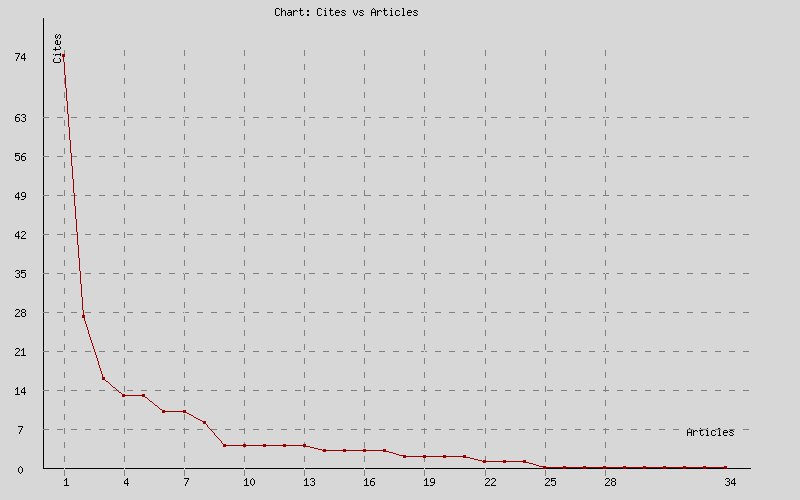
Nevertheless, I still wanted to summarize my scientific outcome somehow, and then I came across a great website, called QuadSearch. It ranks your publications based on citation counts, calculates statistics and research impact indexes, such as the H-index and G-index. The coverage is not perfect, but is pretty decent, as far as I can tell.

And the numbers are…

H-INDEX (Hirsch Number): 8
Egghe’s G-INDEX: 13
Maximum Cites: 74
Total Cites: 214, Total Articles: 34
Cites/Paper: 6.2941


The top 5 papers from this chart are:

  1. Formal models for expert finding in enterprise corpora; SIGIR 2006 (Cited by 74)
  2. Finding experts and their details in e-mail corpora; WWW 2006 (Cited by 27)
  3. Language Modeling Approaches for Enterprise Tasks; TREC 2005 (Cited by 16)
  4. Why are they excited? identifying and explaining spikes in blog mood level; EACL 2006 (Cited by 13)
  5. Broad expertise retrieval in sparse data environments; SIGIR 2007 (Cited by 13)

Let’s see how much these numbers improve in 2009 :)

Future challenges in expertise retrieval

This was the title of the workshop I organized at SIGIR 2008 in July. The main objective of the workshop was to bring people from different research communities together, to discuss recent advances in expertise retrieval, and to define a research roadmap for the next years.
I think (and I hope I’m not alone with this) that the workshop was a success, with many interesting papers and lively discussions. If you’re interested in expert finding but missed it, now is your chance to find out what themes were discussed; check out the workshop summary that was recently published in the December 2008 issue of SIGIR Forum.

A Language Modeling Framework for Expert Finding

Our first paper on formal models for expertise retrieval, Formal Models for Expert Finding in Enterprise Corpora by Krisztian Balog, Leif Azzopardi, and Maarten de Rijke from SIGIR’06, has been very influential. It has received 70 citations according to Google Scholar so far, and the models we laid down there (especially “Model 2”) have become the de facto baselines against which other approaches compare themselves.

A Language Modeling Framework for Expert Finding, from the same authors, will be published in the January 2009 issue of Information Processing & Management. Actually, it is available online since September 2008, but I have not posted about it yet – so it’s time to make up for it!
The IPM paper can be seen as an extension of the SIGIR’06 work. Additions include the proximity-based versions of candidate and document models (Models 1B and 2B), a solution for setting the smoothing parameter for each model by automatic means, advanced document-candidate associations, and an extensive empirical comparison of the different methods, followed by a detailed analysis of the results.